The Farmer Registry is built on land records, so it works most smoothly for farmers who own recorded land. Tenant farmers and sharecroppers are not excluded by national policy. The Ministry says the registry application “has the provision to onboard” them. But whether you can actually register as a tenant depends on your state.
This guide sets out what the official sources say, what is still unclear, and what a tenant or sharecropper can do now.
Owners can register everywhere. Tenants and sharecroppers can register only where the state has switched on a process for them, or indirectly through options such as scheme-level authorisation by the owner. Ask your agriculture office which applies.
What the Ministry says
In a Lok Sabha reply published by the Press Information Bureau in March 2026, the Ministry of Agriculture and Farmers Welfare stated:
“The State Farmers Registry under the AgriStack DPI covers all the landholding farmers, including women farmers, livestock and fisheries and provides them a digital identity called Farmer ID. The Farmers Registry application also has the provision to onboard all the landholding farmers, as well as cultivators such as tenants & sharecroppers.”
Two points stand out:
- The registry’s coverage is described in terms of landholding farmers.
- The application (the software) has a provision for tenants and sharecroppers.
Having a provision in the software is not the same as every state using it. The registry is run by each state, so the state decides whether to open it to tenants and on what proof.
What the official FAQ says
The national FAQ for states (July 2024) explains how the system treats cultivators who are not owners:
“There is a provision in the Farmer Registry to Authorize a beneficiary at Scheme level. It should be done by the owners, to ensure that those cultivating their lands get benefits. This provision is put in place to enable benefits to the right cultivators, without having a need to declare tenancy. However the farm ID would be allocated in favour of land owner to start with.”
In plain terms:
- The land’s ID (Farm ID) goes to the owner. The registry does not move land into a tenant’s name.
- The owner can authorise the cultivator for a particular scheme, so that the person actually farming can receive that scheme’s benefit.
- The owner does not have to declare a formal tenancy. This matters because many owners avoid written tenancy for fear of losing rights under state tenancy laws.
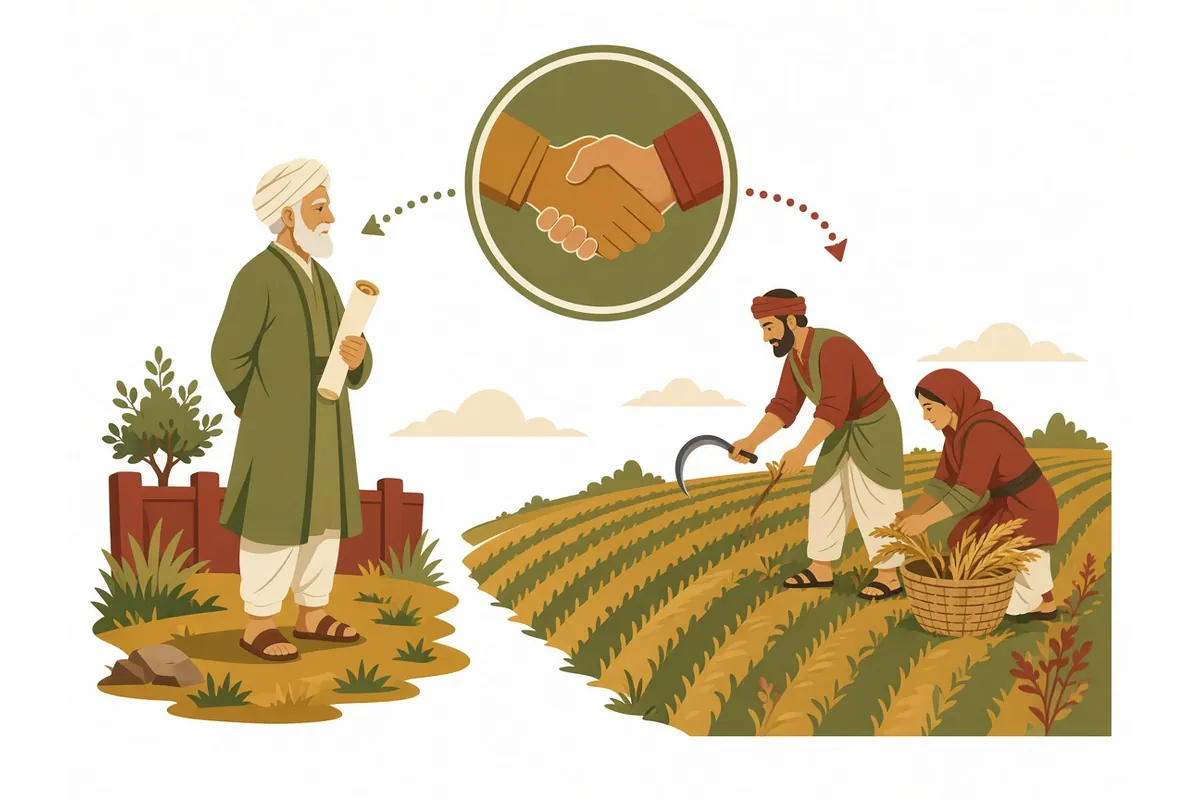
How scheme-level authorisation works in practice (which schemes, which form, who approves) depends on the scheme and the state. We have not found a national public guide to it. Ask your agriculture office.
What one state has announced: Andhra Pradesh
Andhra Pradesh already recognises tenant cultivators through its Crop Cultivator Rights Card (CCRC). In October 2025, The Hans India reported that the state had finalised, with central AgriStack officials, a framework to give unique Farmer IDs to tenant farmers who hold CCRCs. The state’s special chief secretary for agriculture was quoted saying, “Until now, the Unique Farmer ID was issued only to land-owning farmers”, and that the reform would give tenants access to schemes “on par with landowners”.
This is a news report of an announcement. We have not found an official state notice describing how the process works on the ground in 2026. If you are a tenant in Andhra Pradesh, ask your village agriculture assistant or mandal agriculture office whether CCRC holders can register, and what to bring. See our Andhra Pradesh guide.
Common situations
You own some land and lease more
Register with the land in your name. You will get a Farmer ID linked to that land. Your Farmer ID is per person (linked to Aadhaar), so it stays the same whatever land you add later. The leased land stays in the owner’s Farmer Registry profile, unless your state has a tenant process.
You farm land with no written agreement (oral lease, batai, bataidari, adhiya)
This is the most common situation, and the hardest. Without a record, the registry has nothing to link your cultivation to. Options:
- Ask the owner whether they would use scheme-level authorisation for a scheme you need, if your state offers it.
- Ask your agriculture office whether your state accepts any other proof of cultivation.
- Register any land you own, however small, so that you have a Farmer ID.
You farm family land that is in a parent’s name
This is not a tenancy. It is an inheritance question. The usual fix is a succession mutation so the land record shows you. See inherited land.
You are a woman farming your husband’s or family’s land
If your name is not on the land record, you are in the same position as a cultivator who is not an owner. If you are a co-owner or legal heir, your name should be added to the record. See joint land and women farmers.
You farm government or forest land
Rights on such land come from specific laws and pattas (for example, forest rights titles). Whether those are in the state’s land records used by the registry varies. Ask the agriculture or revenue office.
Local names for tenancy and sharecropping
Tenancy and sharecropping go by many names, and you may see these on our state guides:
| Term | Where commonly used | Meaning |
|---|---|---|
| Batai / bataidar | North India, Bihar | Sharecropping / sharecropper |
| Adhiya | Chhattisgarh, parts of central India | Sharecropping, often half the crop |
| Bhag chasi | Odisha | Sharecropper |
| Theka | Haryana, Punjab | Cash lease |
| Koulu | Andhra Pradesh, Telangana | Lease or tenancy |
These are general terms. Their legal status depends on each state’s tenancy law.
Why tenants matter for the registry
The Farmer Registry is meant to help deliver schemes, credit, insurance and procurement. In a Lok Sabha reply in August 2026, the Ministry said it is being integrated with PM-KISAN, the Jan Samarth platform for Kisan Credit Card loans, and MSP procurement systems. If the person who actually grows the crop is not in the registry, these services may reach the owner instead of the cultivator.
That is why the provision for tenants exists. It is also why owners worry: a written record of tenancy can affect their rights under some state laws. Scheme-level authorisation tries to solve both problems by letting benefits reach the cultivator without recording a tenancy.
If you are the land owner
Owners are often asked by the people who farm their land to “add them to the Farmer Registry”. Here is what you should know:
- Your Farmer ID and land stay yours. According to the official FAQ, the Farm ID is allocated to the owner.
- Scheme-level authorisation does not declare a tenancy. The FAQ describes it as a way to let benefits reach the cultivator “without having a need to declare tenancy”.
- It is per scheme. Authorising someone for one scheme is not a general transfer of rights.
- Check before you agree. Ask the agriculture office exactly what you are signing, which scheme it covers, and how to withdraw it later.
- Never share your OTP with the tenant or an agent. If authorisation needs your consent, give it yourself through the official process.
Why state tenancy laws matter
Land tenancy is governed by state laws, which differ widely. Some states restrict or prohibit leasing of agricultural land; others recognise tenants through special cards or registers. In several states, a recorded tenancy has historically given tenants strong rights, which is one reason informal, unwritten leasing is common.
The Farmer Registry does not change these laws. Nothing in the official AgriStack material we reviewed says that registering a cultivator creates tenancy or ownership rights. If you have a dispute about tenancy, the registry cannot settle it. Seek advice from the revenue office or a lawyer.
Questions to ask your agriculture office
- Does our state’s Farmer Registry allow tenants or sharecroppers to register now?
- If yes, what proof of cultivation is accepted?
- Is there scheme-level authorisation by the owner, and for which schemes?
- Can I register with the small plot I own and add cultivated land later?
- Which office or CSC handles tenant registrations?
- Will registering as a tenant affect the owner’s rights? (The owner may ask you this.)
What not to do
- Do not claim land in the owner’s name as your own. The name match will fail, and the claim will be rejected.
- Do not pay anyone who promises a “tenant Farmer ID” outside the official process.
- Do not hand over your Aadhaar or OTP to anyone offering to “add your leased land”.