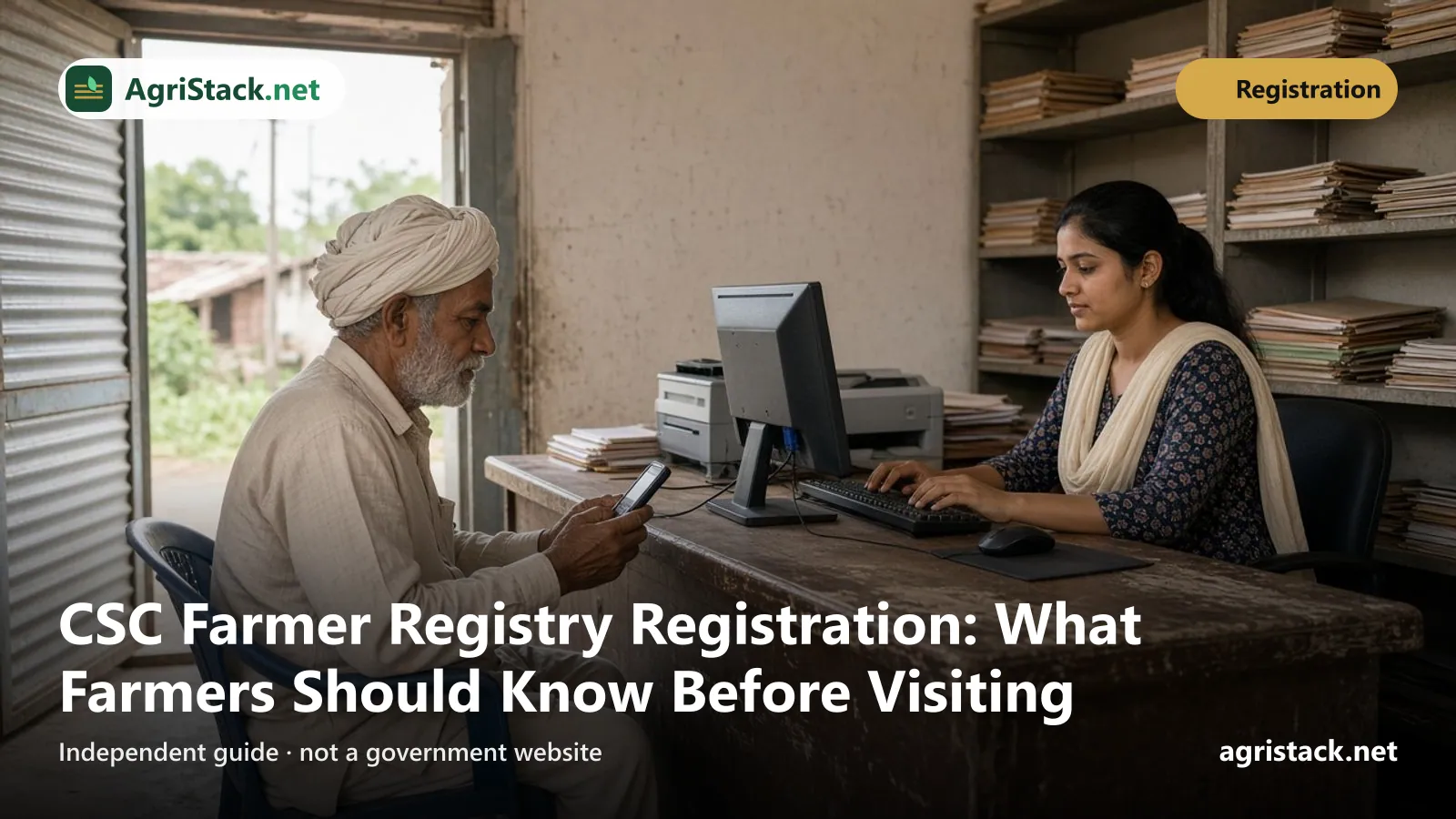
CSC Farmer Registry Registration: What Farmers Should Know Before Visiting
Registering for a Farmer ID at a Common Service Centre: what to bring, how the visit works, whether you should pay, and how to protect your Aadhaar and OTP.
Published
Updated for 2026 · Official figures to 6 August 2026
A Farmer ID links you, your land and your crops in your state's Farmer Registry, so schemes and services can reach you with less paperwork. We explain how it works in simple English and point you to the verified official portal for your state.
Independent website. AgriStack.net is not a government service. We never ask for Aadhaar numbers, passwords or OTPs. Registration and login happen only on official state portals.

10.34 crore
Farmer IDs generated as on 6 August 2026
22 state portals
Official Farmer Registry addresses we checked on 12 October 2026
648 districts
Covered by the Rabi 2025-26 Digital Crop Survey
The basics
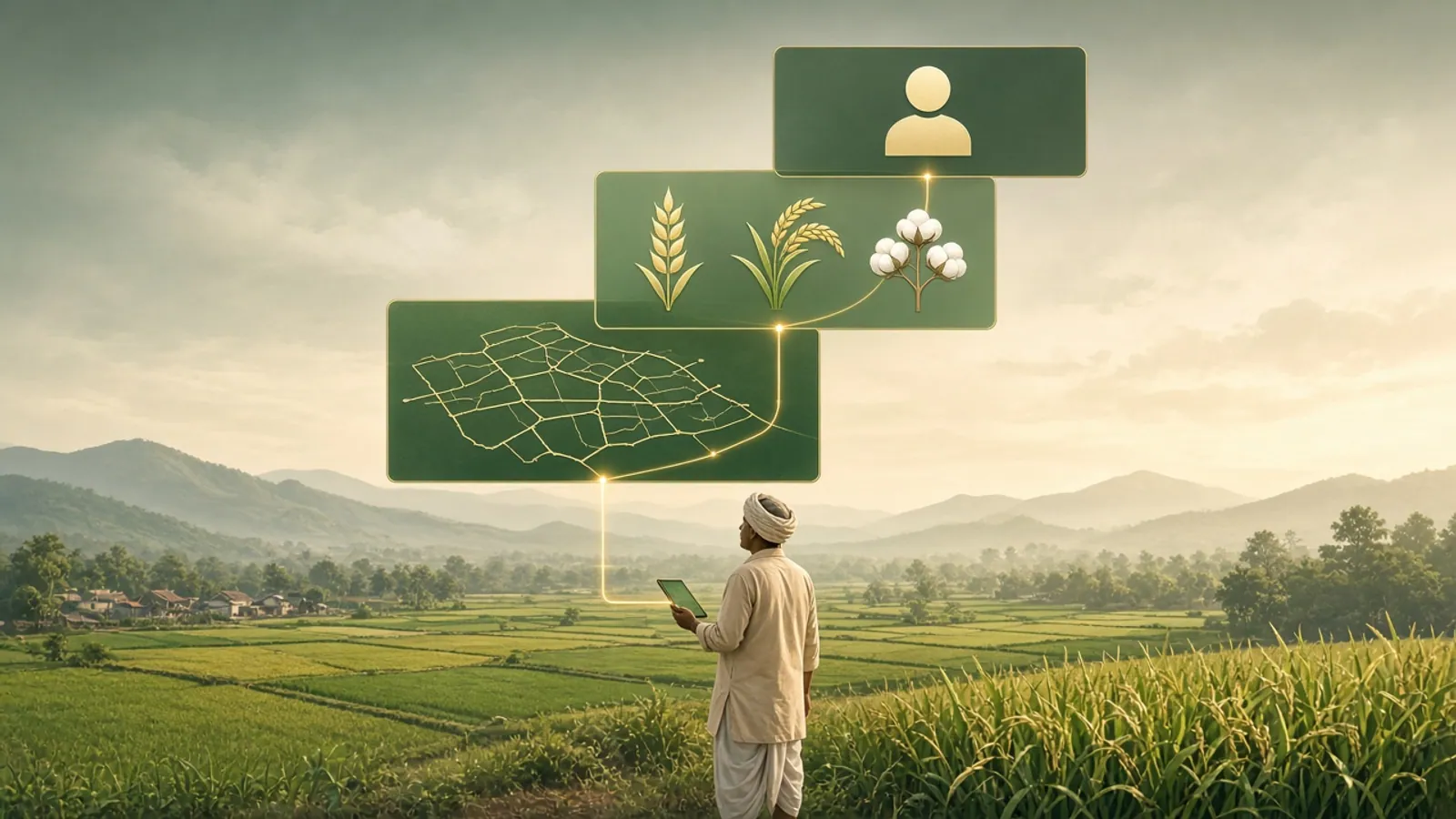
AgriStack is the Government of India's digital public infrastructure for agriculture. The Ministry of Agriculture and Farmers Welfare describes it as a farmer-centric foundation "for efficient, easier and faster service and scheme delivery to the farmers". In plain words, it is a set of connected records that tell government systems who a farmer is, which land they hold and what they grow.
It rests on three foundation registries, and each one is created and maintained by the State Government or Union Territory:
Because each state builds its own registry on shared standards, the system is called federated. The Government has said that the ownership of the Farmer Registry data stays with the states, and that farmer data is shared with other organisations only with the farmer's consent.
State Farmer Registries
You register in the state where your land is recorded. Each card opens our guide for that state, with the official portal address, land record terms used there and the latest official Farmer ID count. We only show a portal link after we have checked that it opens.
2.48 crore Farmer IDs (6 Aug 2026)
upfr.agristack.gov.in/
1.36 crore Farmer IDs (6 Aug 2026)
mhfr.agristack.gov.in/
1.14 crore Farmer IDs (6 Aug 2026)
mpfr.agristack.gov.in/
62.47 lakh Farmer IDs (6 Aug 2026)
gjfr.agristack.gov.in/
87.46 lakh Farmer IDs (6 Aug 2026)
rjfr.agristack.gov.in/
55.50 lakh Farmer IDs (6 Aug 2026)
bhfr.agristack.gov.in/
12.27 lakh Farmer IDs (6 Aug 2026)
hrfr.agristack.gov.in/
20.87 lakh Farmer IDs (6 Aug 2026)
odfr.agristack.gov.in/
14.65 lakh Farmer IDs (6 Aug 2026)
asfr.agristack.gov.in/
66.06 lakh Farmer IDs (6 Aug 2026)
See guide for details
36.53 lakh Farmer IDs (6 Aug 2026)
tnfr.agristack.gov.in/
51.22 lakh Farmer IDs (6 Aug 2026)
apfr.agristack.gov.in/
37.82 lakh Farmer IDs (6 Aug 2026)
cgfr.agristack.gov.in/
50.69 lakh Farmer IDs (6 Aug 2026)
tlfr.agristack.gov.in/
3.30 lakh Farmer IDs (6 Aug 2026)
ukfr.agristack.gov.in/
Karnataka is a special case: it has its own long-running FRUITS farmer database. Our Karnataka guide explains how it relates to AgriStack.
Step by step
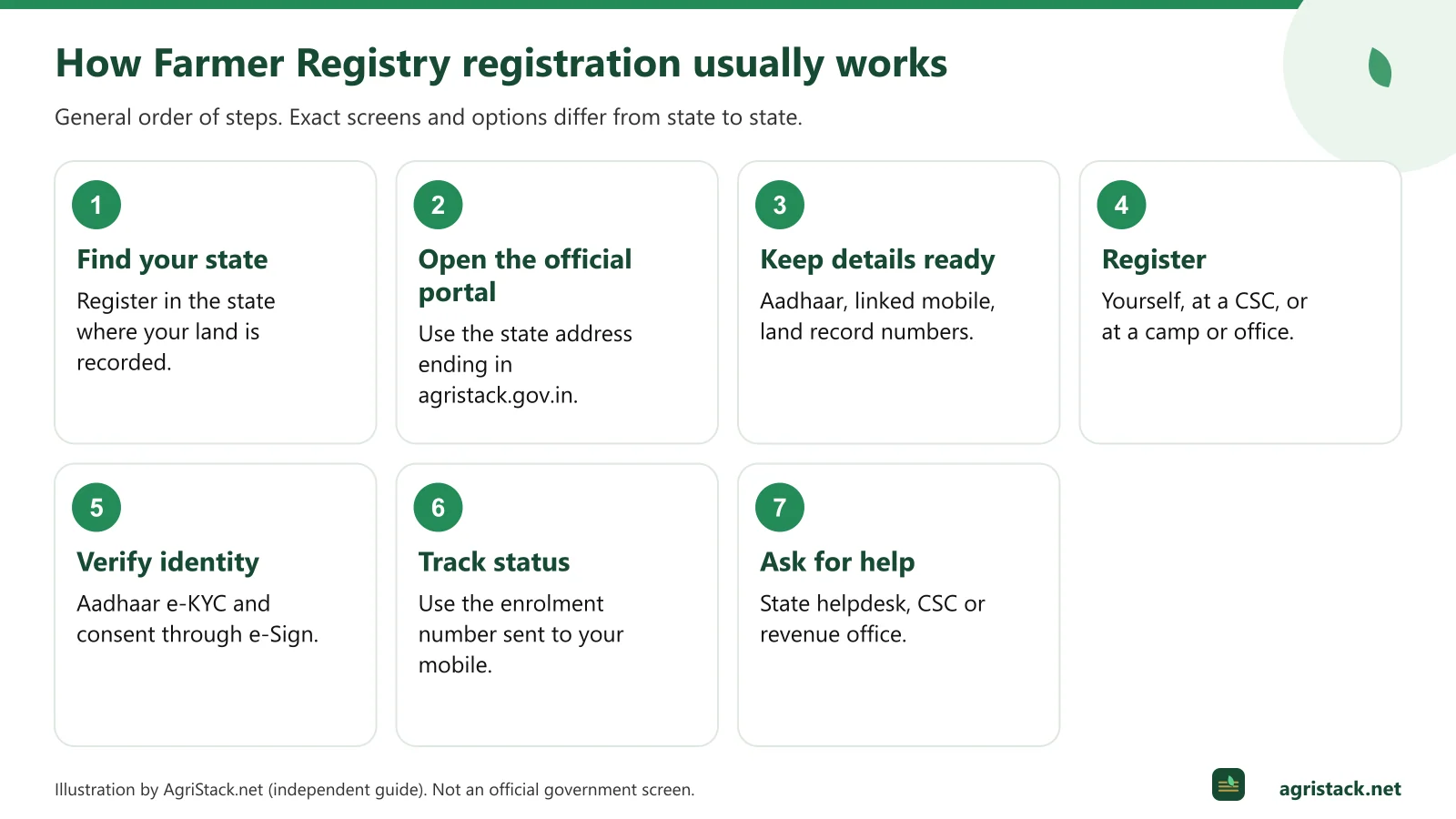
The broad steps below are common to most states because the registries are built on the same national design. The screens, the order of some steps and the documents asked for can differ, so treat this as a map, and follow what your own state portal shows.
Register in the state where your agricultural land is recorded. If you hold land in two states, the official FAQ says you still get a single Farmer ID against your Aadhaar.
Same in most states
State Farmer Registry portals use addresses ending in agristack.gov.in, such as upfr.agristack.gov.in. Avoid look-alike websites and unknown apps.
Same in most states
Keep your Aadhaar, the mobile number linked to Aadhaar and your land record details (village, survey/khasra/gata number) ready. Extra requirements vary by state.
Check your state portal
Many states allow self-registration on the portal or app, plus assisted registration at CSCs, camps or agriculture and revenue offices.
Check your state portal
Identity is confirmed through Aadhaar e-KYC (OTP or biometric). You then claim your land and give consent, usually with an Aadhaar-based e-Sign.
Same in most states
You receive an enrolment number by SMS. Officials verify your land claim; once approved, a Farmer ID is generated.
Same in most states
If your claim is rejected or details are wrong, use the state portal's update or grievance option, or ask the helpdesk, CSC or revenue office.
Check your state portal
Farmer ID explained
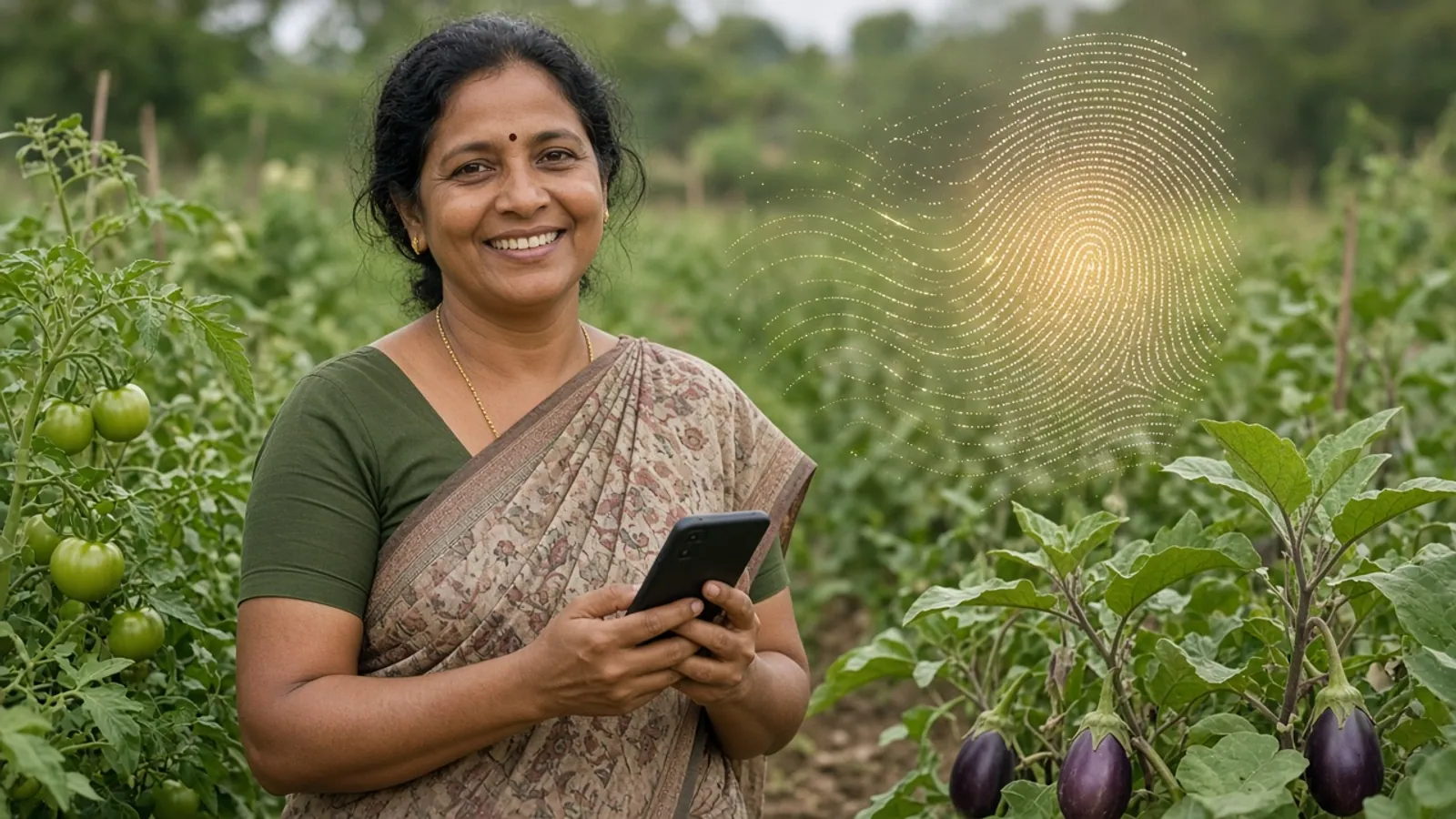
A Farmer ID is a unique digital identity given to a farmer in the state Farmer Registry. It is created against the farmer's Aadhaar and linked to the farmer's land records. AgriStack's own description calls it a functional ID with a digitally verifiable credential.
Why it is used: departments can confirm who you are and what land you hold without asking for the same papers again and again. The Government says Farmer IDs are being used for PM-KISAN, crop insurance under PMFBY, MSP-based procurement, Kisan Credit Card loans, fertiliser booking and disaster relief, depending on the state.
How state registries work: each state first groups the land in its records by owner and village. When you register, the system shows the land linked to your name; you claim it, give consent, and revenue officials approve the claim. The official FAQ says the Farmer ID is then generated, typically within a day of approval.
Verification: identity is checked with Aadhaar e-KYC, and land is checked against the state's record of rights. Your name in Aadhaar and in the land record must match closely, which is the most common reason for delays.
Privacy: according to the official FAQ, the Farmer Registry application does not store your Aadhaar number (it is kept in a secure data vault), and your land details are not shared with outside organisations without your e-Signed consent.
Login and registration help
Each guide separates what is common to all states from what you must confirm on your own state portal.
Reach the right state login page and choose the correct user type.
What to prepare and how self, CSC and camp registration differ.
What the ID is, where it is stored, and how to check it officially.
What an enrolment number means and how approval works.
Name, mobile or land details wrong? How corrections are requested.
How Common Service Centres help farmers without smartphones.
OTP, e-Sign, land details and name-mismatch problems explained.
Helpline numbers we found on official state pages, with sources.
AgriStack statistics
Every figure below comes from a written reply by the Ministry of Agriculture and Farmers Welfare in Parliament or a Press Information Bureau release. We show the "as on" date the Government gave, not the date we copied it.
Farmer IDs generated, India
10,33,93,603
As on 6 August 2026
Up from 9,18,69,685 on 19 March 2026. Lok Sabha reply
#1 by Farmer IDs: Uttar Pradesh
2.48 crore
2,47,59,182 as on 6 August 2026
Larger states have more landholders, so totals reflect size as well as progress. Source
#2 by Farmer IDs: Maharashtra
1.36 crore
1,36,28,992 as on 6 August 2026
Larger states have more landholders, so totals reflect size as well as progress. Source
#3 by Farmer IDs: Madhya Pradesh
1.14 crore
1,14,44,193 as on 6 August 2026
Larger states have more landholders, so totals reflect size as well as progress. Source
Digital Crop Survey: Rabi 2025-26 covered 648 districts and more than 31.3 crore plots; Kharif 2025 covered 604 districts and more than 28.5 crore plots (sources linked on the statistics page).
District, tehsil and village
The Farmer Registry does not create new land records. It reads the land records your state already keeps. That is why, during registration, you are asked to pick your district, then your sub-district (called tehsil, taluka, mandal or block in different states), then your village, and finally your land's survey number.
The official FAQ explains that if your land does not appear automatically, you can claim it by entering at least the district, sub-district, village, survey number and sub-survey number from your record of rights. If your village is missing, or the land is still in a deceased relative's name, the fix usually starts at the revenue office, not on the registry portal.
For Uttar Pradesh, the Government has published district-wise Farmer ID figures for all 75 districts, which you can search in our district guide. We have not found official village-level figures for any state, so we do not show any.
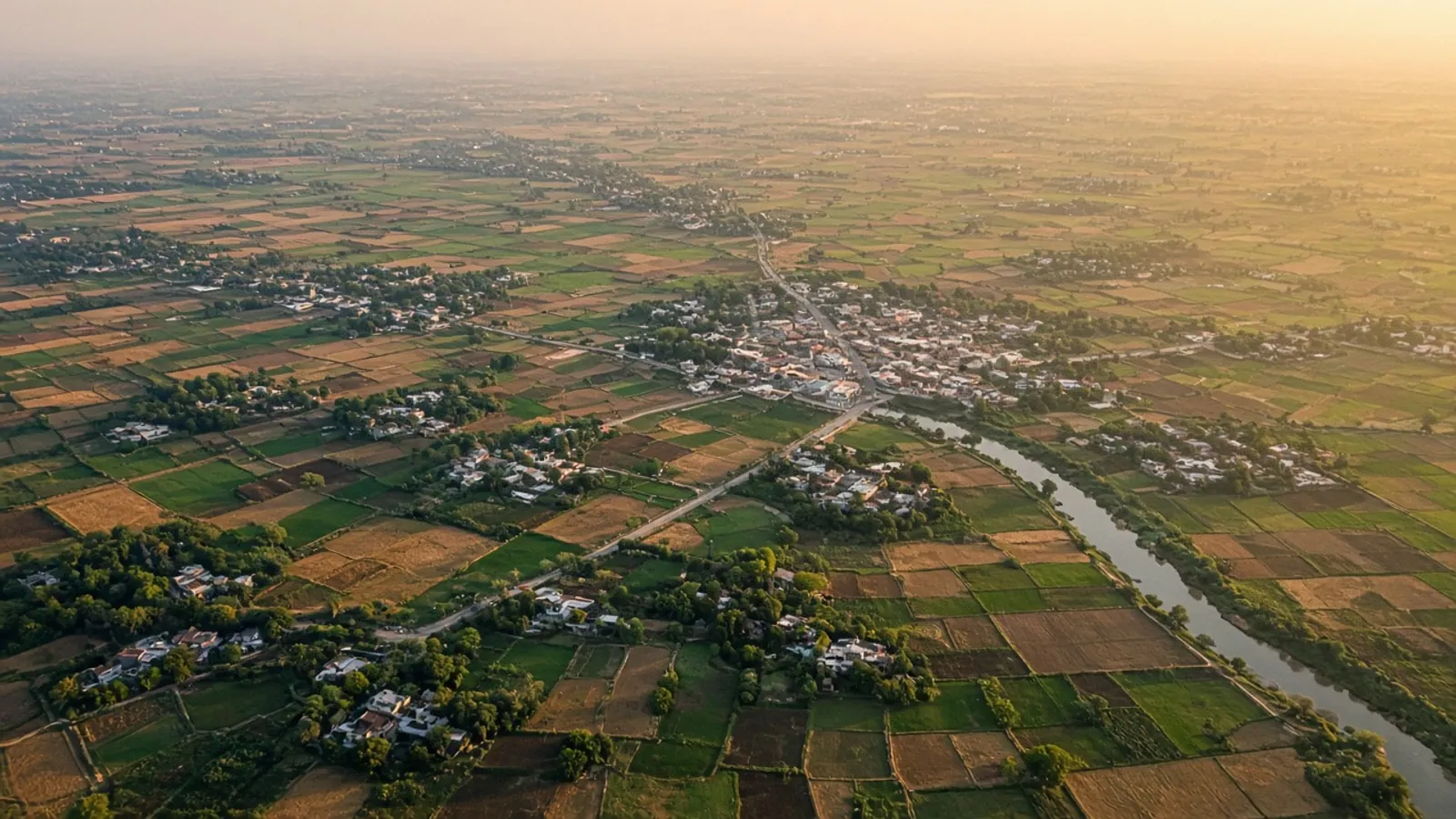
Latest verified guides
Registering for a Farmer ID at a Common Service Centre: what to bring, how the visit works, whether you should pay, and how to protect your Aadhaar and OTP.
Published
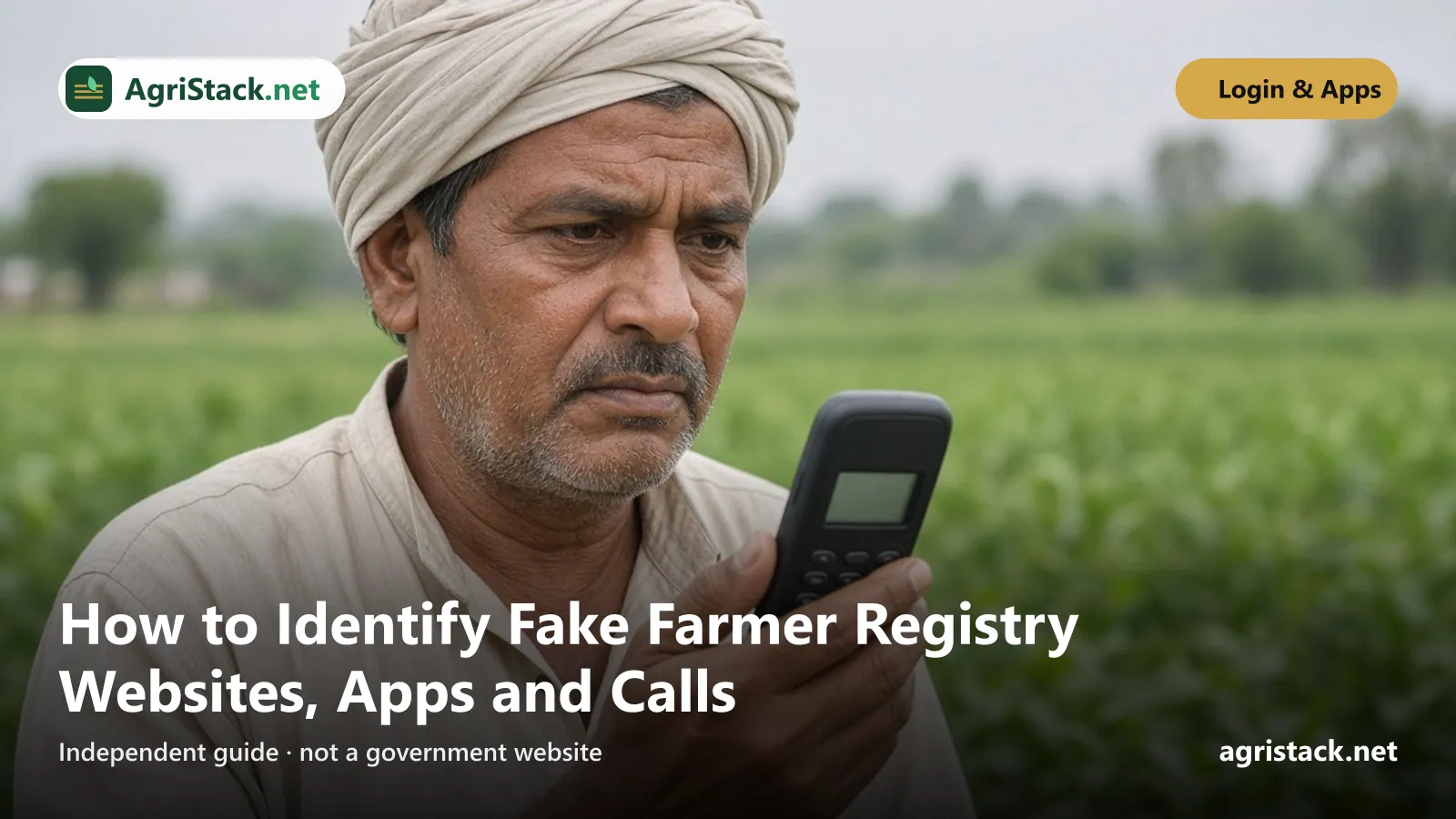
Tell an official Farmer Registry portal from a fake: check for .gov.in, never share OTPs, avoid paid 'Farmer ID cards' and report fraud on 1930.
Published

Farmer ID is for the person, Land ID for the plot, Farm ID for one ownership share in it. How the three AgriStack IDs differ, with examples.
Published
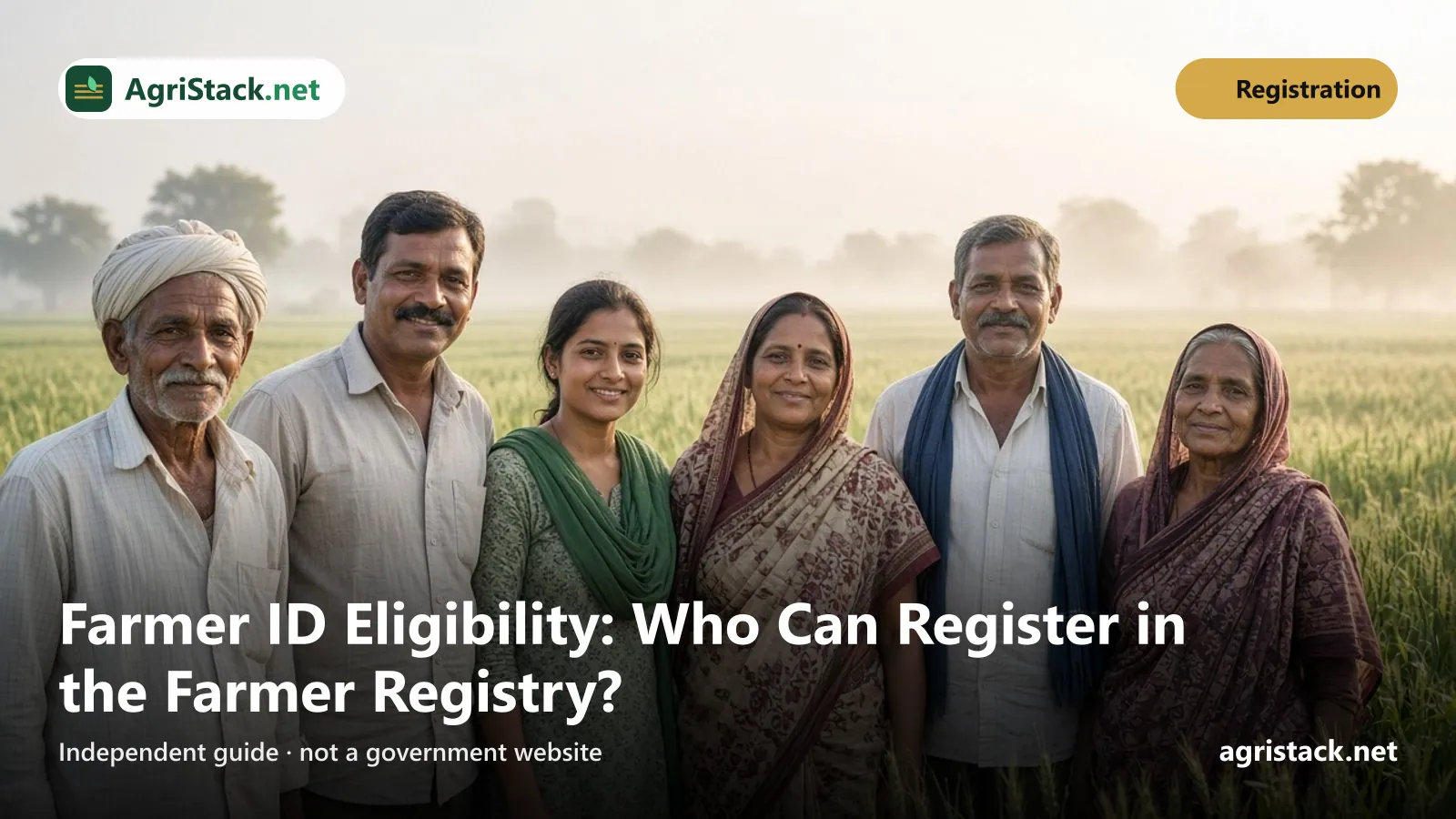
Who can get a Farmer ID: landholders, women, joint owners, heirs, tenants and others, from official sources, and where your state decides.
Published
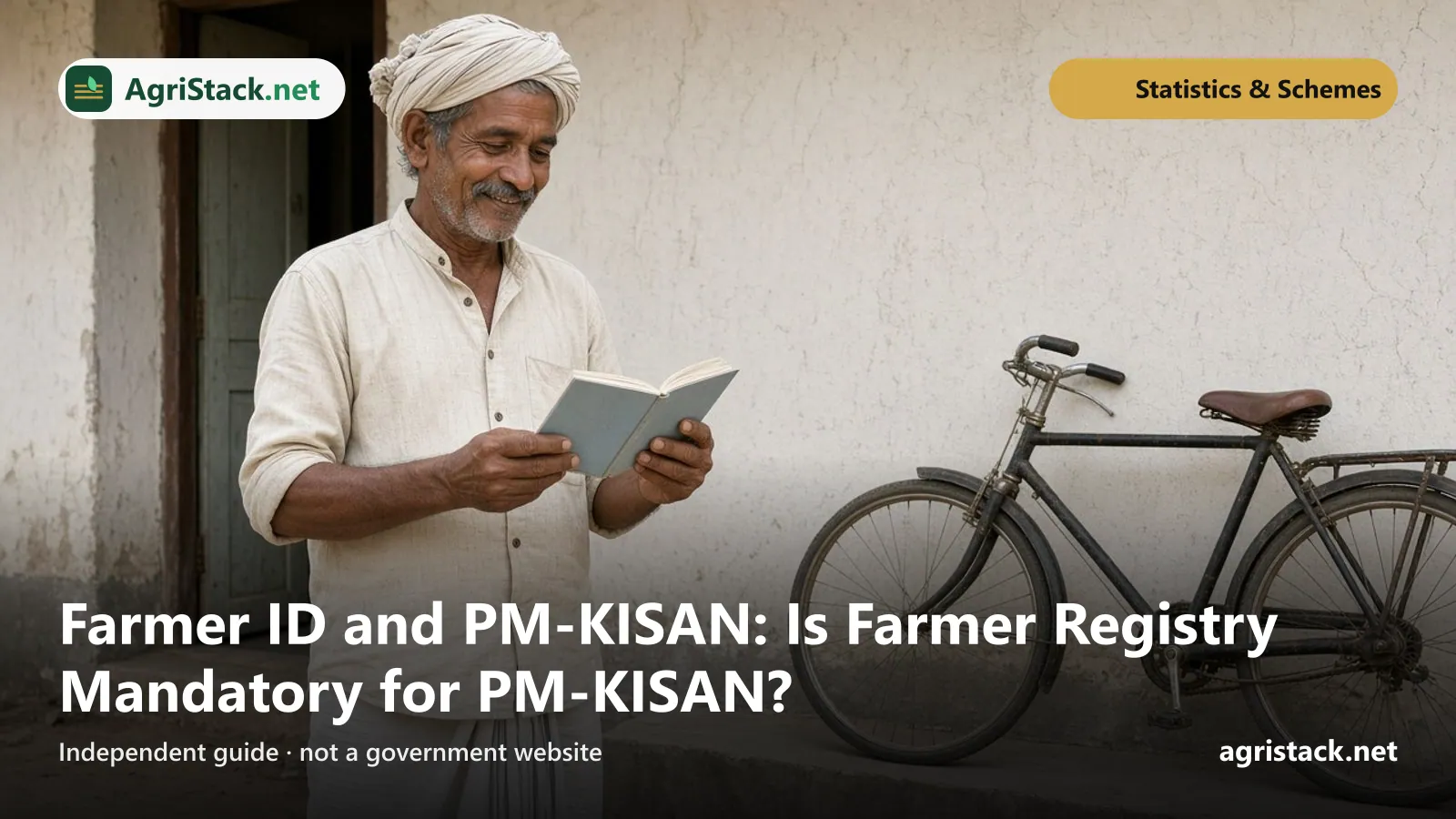
Farmer ID is mandatory for new PM-KISAN registrations in states where the Farmer Registry has started. What this means for new and existing farmers.
Published
How to check your Farmer Registry application status with your enrolment number, what each stage means, how long approval takes, and what to do if stuck.
Published
Common questions
AgriStack is a set of digital records about farmers, their land and their crops, built by State Governments under common standards set by the Ministry of Agriculture and Farmers Welfare. Its three foundation registries are the Farmer Registry, Geo-Referenced Village Maps and the Crop Sown Registry. Government departments use it to deliver schemes and services with less paperwork.
No. AgriStack.net is an independent information website and is not run by any government. The official national AgriStack site is agristack.gov.in, and farmer registration happens on each state's own Farmer Registry portal, usually at an address like upfr.agristack.gov.in or mhfr.agristack.gov.in.
On the Farmer Registry portal of the state where your agricultural land is recorded, or with help from a Common Service Centre, a registration camp or your local agriculture or revenue office. Our state-wise portal directory lists each address we have verified.
In most states you need your Aadhaar number, the mobile number linked to Aadhaar (to receive OTPs) and details of your land from the record of rights, such as the village and survey, khasra or gata number. Some states ask for more. Check your state portal or CSC before you start.
After you claim your land and give consent, the state system gives you an enrolment number on the mobile number you used. You can use it on your state Farmer Registry portal to check status. Once officials approve the land claim, a Farmer ID is generated against your Aadhaar.
No. PM-KISAN is a scheme, while the Farmer ID is an identity in the state Farmer Registry. The Government says Farmer IDs are being integrated with schemes such as PM-KISAN, crop insurance and Kisan Credit Card, but each scheme has its own rules. Always confirm current requirements on pmkisan.gov.in or with your agriculture office.
According to the Ministry of Agriculture and Farmers Welfare, 10,33,93,603 Farmer IDs had been generated across 21 states and union territories as on 6 August 2026. Our statistics page shows the state-wise figures and links to the original documents.
Never. This website has no login and no forms that collect Aadhaar numbers, passwords or OTPs. If any website, app, phone caller or person asks you for your OTP to "register" you, do not share it. Use only official .gov.in portals or a trusted CSC.
Official source information
We are a small independent editorial team, not a government office, so we cannot see inside any registry. What we can do is check what the Government has published and tell you exactly where each fact comes from.
If something has changed on an official portal, please tell us through our contact page. Read more in our editorial policy.
National AgriStack website, including the Farmer Registry FAQ document.
State-wise Farmer ID and Digital Crop Survey tables, August 2026.
Ministry statements on AgriStack progress and privacy.
The only places where you can actually register, log in or check status.
Pick the situation closest to yours.